Surviving solo in 99 Nights in the Forest is much tougher than playing with friends. You must gather supplies, protect your camp, cook food, fight enemies, and rescue children without anyone watching your back. The good news is that a smart plan can make solo runs far more manageable.
The game’s main goal is simple: build a camp, survive the forest, and stay alert because something is always watching. In solo mode, your campfire and preparation matter more than risky exploration.
How to Survive Solo in 99 Nights
The best solo strategy is to treat every daytime trip as a mission with one clear goal. Do not run across the map hoping to find useful items. Instead, decide whether you need wood, food, fuel, loot, or a rescue target, then return to camp before the situation becomes dangerous.
At the start of a run, focus on building a safe routine rather than trying to get powerful gear immediately. Early resources are what keep you alive long enough to find better weapons and upgrades later.
Your main priorities should be:
- Keep the campfire fueled and upgraded.
- Build a small, easy-to-defend camp.
- Collect enough food before hunger becomes a problem.
- Bring home saplings and useful materials after every trip.
- Avoid staying far from camp when darkness is close.
A solo player cannot afford wasted time. If you get knocked out far away, there is no teammate available to revive you or keep the fire alive.
Start Strong in the Early Days
The first few days decide whether your solo run will feel easy or impossible. Start by gathering wood from trees near your camp. Wood is important because it helps fuel the fire and supports your early building plans.
When you chop trees, do not ignore saplings. Bring them back to camp and plant them close to your safe area. This gives you a renewable supply of wood and can help create a barrier around the base.
Your next goal is food. Pick up berries, hunt safe animals when possible, and cook food before you desperately need it. Carry some food with you on longer trips, but leave extra supplies at camp for emergencies.
Try not to travel too far on day one. A short, successful trip that gives you wood, food, and a few saplings is better than a long trip that ends with you lost in the dark.
Make Your Camp Easy to Defend
Many players make the mistake of building a huge base in solo mode. A large base may look impressive, but it gives enemies more places to attack. Since you are defending alone, a compact camp is usually safer.
Place important items close to your fire. You want your food, storage, defenses, and crafting tools within a short running distance. If an enemy attacks, you should be able to move around your camp without getting stuck behind your own buildings.
A useful solo setup looks like this:
- Keep the campfire in the middle.
- Place food and crafting stations nearby.
- Build a small barrier around the outside.
- Plant saplings near the edge of your camp.
- Leave a clear path so you can move during an attack.
Saplings can be especially useful because they provide future wood while also making it harder for enemies to reach you quickly. Traps and ranged weapons can also help you defend the camp without standing directly in danger.
Keep the Fire Alive
Your campfire is the center of your solo run. It creates your safe area, helps you survive the night, and gives you a place to return after gathering supplies. Never leave camp with an almost-empty fire unless you are making a very short trip.
Use wood early, but save better fuel sources when you find them. If your game has options such as biofuel or oil, keep them for longer trips or difficult nights. These materials can help the fire last while you are away from camp.
Before you leave to explore, ask yourself one question: “If I get delayed, will my campfire still be burning when I return?” If the answer is no, add more fuel first.
A strong campfire also gives you more room to work safely. Upgrading the fire expands your safer area and can help protect you from dangers in the forest.
Explore With a Return Plan
Solo exploration should be careful, not slow. You need loot, children, weapons, and rare materials, but you should never wander without knowing how you will get back.
First, learn landmarks near your base. Look for cabins, paths, unusual rocks, water, or other objects that help you recognize where you are. When you find a useful location, remember the direction from camp before moving deeper into the forest.
Do not fill your inventory with random items. Prioritize things that help you survive longer:
- Food and healing supplies.
- Fuel for the campfire.
- Better weapons and ammo.
- Materials for defenses.
- Items needed for rescues or upgrades.
For example, imagine you find a chest far from camp late in the day. Opening it may feel tempting, but the smarter choice is often to turn back. A rare item is not useful if you die before bringing it home.
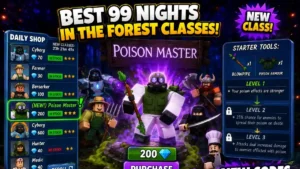
Choose a Class That Fits Solo Play
If the game gives you class options, choose one that solves your biggest solo problem. Lumberjack is a good choice for beginners because faster wood collection helps with fire fuel, camp upgrades, and defenses.
Cyborg can be a strong choice for players who struggle with combat, while Camper may suit players who want more comfort during long survival runs. The “best” class depends on your skill level, but resource gathering is usually more valuable than flashy combat power during the early game.
If you are new, pick the class that makes your first few days easier. Surviving the beginning is more important than having the strongest late-game build.
Fight Smarter, Not Harder
In solo mode, you should avoid taking fights that do not give you a clear reward. Do not chase every enemy through the forest. Instead, defend near your fire, use barriers, and attack from a safe position whenever possible.
Ranged weapons are useful because they let you damage enemies while keeping distance. Traps can also buy time when several enemies approach your camp. If you are low on health, stop fighting and focus on staying alive. You can always get more loot later, but one careless death can end the run.
The forest becomes more dangerous as you continue, so upgrade your supplies before forcing difficult rescues or exploring areas full of threats.
Common Solo Mistakes to Avoid
The biggest solo mistake is leaving the camp unprepared. Players often rush out for loot, forget food or fuel, then return too late to save their fire.
Avoid these problems:
- Exploring at night without a strong reason.
- Building a base that is too large to defend alone.
- Using all your food during one trip.
- Ignoring saplings and renewable wood.
- Fighting enemies when you are already low on health.
- Going after distant objectives without enough supplies.
Solo survival is not about moving fast all the time. It is about making fewer bad decisions. Gather during the day, return before night, strengthen your camp, and take bigger risks only after you have food, fuel, weapons, and defenses ready.
With a compact base, a well-fed campfire, and careful daily trips, you can survive much longer in 99 Nights in the Forest—even without a team.